
WELCOME BONUS 300%
UP TO €2000 + 100
FREE SPINS
UP TO €2000 + 100
FREE SPINS
Home → Games
Casino games at Golisimo Casino
Craps Pass Line: 1.41% House Edge
The Pass Line bet in Craps carries an RTP of 98.59% and a house edge of 1.41%, measured per resolved bet rather than per roll. Because a Pass Line wager can take several rolls to resolve, the edge works out to roughly 0.42% per individual roll, which makes it one of the cheapest main bets in the game. On €100 of resolved Pass Line stakes, the average cost is €1.41.
For comparison, the Don't Pass bet is marginally cheaper at 1.36% house edge, since a 7 wins and a 12 is a push. The standard deviation of the Pass Line is 1.00, and the Come bet uses identical maths to the Pass Line, so the same 1.41% figure applies. A €10 Pass Line bet therefore gives up about €0.14 in expected value per resolution.
Craps payouts on the Pass Line are settled at 1:1, and the same applies to the Come bet. That 1.41% sits well below the 2.70% house edge of European Roulette, so €100 resolved on the Pass Line costs €1.41 against €2.70 on the single-zero wheel. Players who avoid the exotic props keep their cost per resolution close to this baseline.
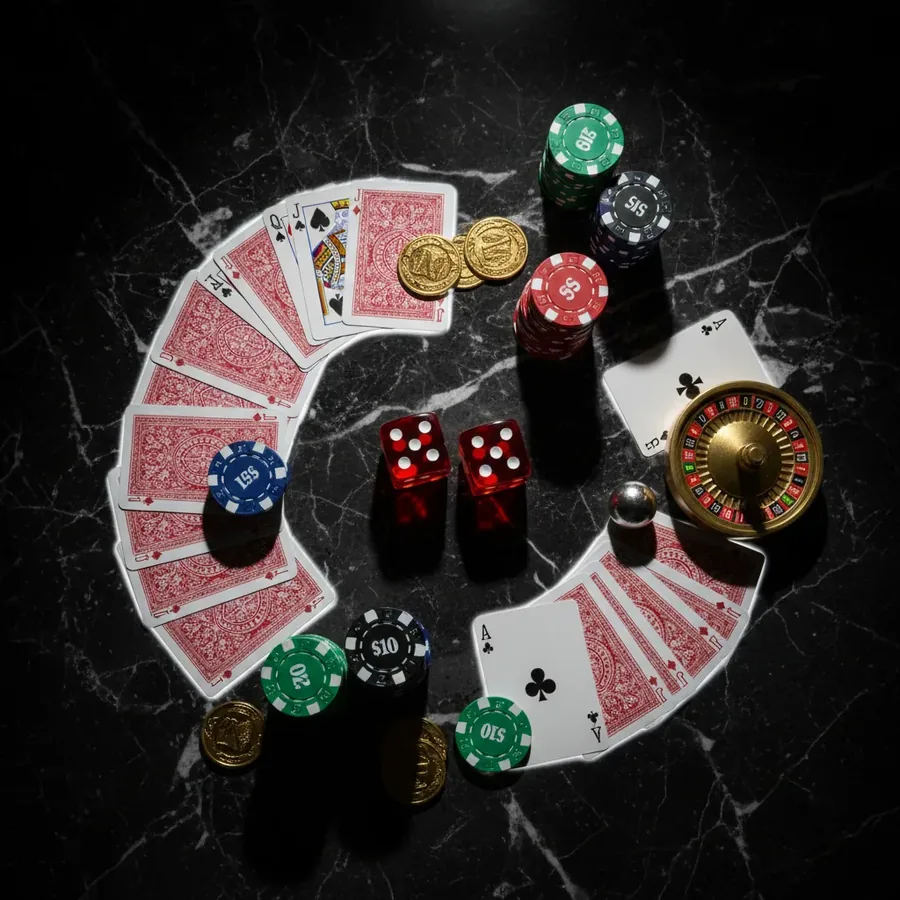
The Craps Odds Bet: 0% House Edge
The craps odds bet is an additional wager placed behind an existing Pass Line or Come bet, and it carries no house edge at all, so 0% is kept by the casino on that portion of the stake. The Pass Line itself returns 98.59% with a house edge of 1.41%, while the Come bet has identical maths. A 100 € Pass Line stake therefore costs about 1.41 € on average, whereas the same amount in odds costs nothing.
Craps odds pay at true odds rather than the fixed 1:1 of the Pass Line, which is the reason the edge disappears. The base game edge is quoted per resolved bet at 1.41%, and per roll it falls to 0.42%, with a standard deviation of 1.00. Don't Pass is slightly better at 98.64% and 1.36%, with a push on 12, but it cannot be combined with odds in the same way as the Pass Line.
A reader staking 200 € in total can split it, for example 100 € on the Pass Line and 100 € in odds, and only the first 100 € carries the 1.41% edge, which is roughly 1.41 € on average. Without the odds portion, the full 200 € would carry about 2.82 € in expected cost. The size of the odds bet is limited by the table, so the zero-edge share of the total stake stays a fraction of it.
Dozen Bets at 2:1: Twelve Numbers, a Third of the Wheel
The Dozen bet in Roulette covers twelve numbers and pays 2:1, so a €10 stake returns €30 including the original bet when it lands. On the European wheel with 37 pockets, the RTP is 97.30% and the house edge is 2.70%, identical to every other bet on that wheel. The payout is set as if there were 36 pockets, which is why the edge stays the same across all bet types.
Coverage is 12 of 37 pockets, or roughly one third of the wheel. The Column bet also pays 2:1 and also covers twelve numbers, so the two behave identically in maths terms. A Straight bet, by contrast, covers one pocket and pays 35:1, yet the house edge remains 2.70%. On €100 of Dozen stakes the average cost is €2.70.
The American wheel changes the picture: with 38 pockets the RTP drops to 94.74% and the house edge rises to 5.26% on the same 2:1 Dozen payout. On €100 of Dozen stakes there, the average cost is €5.26 instead of €2.70. The French wheel with La Partage keeps inside bets at 2.70%, since the rule applies only to even-money bets.
House Edge and RTP: Two Sides of the Same Number
House edge is the average share of each stake that the casino keeps, and RTP is its mirror image, so the two always add up to 100%. European Roulette shows this plainly: an RTP of 97.30% pairs with a house edge of 2.70%, and 97.30 plus 2.70 equals 100. Both figures describe the same long-run relationship between stakes and returns.
The spread across games is wide. Craps Pass Line sits at 98.59% RTP and 1.41% house edge, while the Baccarat Tie bet at 8:1 pays only 85.64% RTP with a 14.36% house edge, the worst main bet in Baccarat. Blackjack with 6 decks, S17, DAS and a 3:2 payout reaches 99.54% RTP and a 0.46% edge. On €100 of Tie stakes the average cost is €14.36 against €1.41 on the Pass Line.
Rule changes shift the number rather than replace it. A dealer hitting soft 17 lowers Blackjack RTP by 0.22 percentage points, doubling after a split improves it by about 0.14 percentage points, and resplitting aces adds 0.08 percentage points. Each adjustment moves the RTP and the house edge by the same amount in opposite directions. RTP is a theoretical long-run average, never a guarantee for a single session.
Game categories at a glance
| Category | Examples | Stakes From | Highlight |
|---|---|---|---|
| Slots | Book of Demi Gods 2, Money Train 2, Jammin' Jars | 0.10 EUR | thousands of titles |
| Table games | Roulette, Blackjack, Baccarat | 0.50 EUR | classic rules |
| Live casino | Dream Catcher, Lightning Roulette | 0.20 EUR | real dealers |
| Jackpot games | Mega Moolah, Divine Fortune, Age of the Gods | 0.20 EUR | progressive pools |
| Instant games | Aviator, Plinko, Mines | 0.10 EUR | fast rounds |
| Video poker | Jacks or Better, Deuces Wild | 0.25 EUR | strategy based |
The 9/6 Paytable: Nine for a Full House, Six for a Flush
Video Poker Deuces Wild — Not So Ugly Ducks (NSUD) returns 99.73% to the player, and its pay table pays nine coins for a Full House and six for a Flush. The 9/6 name comes from exactly those two multipliers, with a house edge of 0.27%. Four of a Kind pays 4 and Five of a Kind pays 16, so 100 € of stakes cost about 0.27 € on average.
Illinois Deuces, the weaker version of the same game, returns 98.91% instead of 99.73%. The gap between the two is 0.82 percentage points, which turns into 0.82 € per 100 € staked over the long run. Volatility differs from Full Pay, so the same pay table does not mean the same bankroll swing.
The top of the table carries a Natural Royal at 800 and Four Deuces at 200, followed by a Wild Royal at 25. A Straight Flush returns 10, a Straight and a Flush 2, Three of a Kind 1, and a Full House 3. The 0.27% house edge applies only if the player follows the correct strategy for this pay table, which is a theoretical long-run average over hundreds of thousands of hands and not a forecast for one session.
35:1 Instead of 36:1: Where the House Edge Comes From
Roulette European runs on 37 pockets, numbered 1 to 36 plus a single zero, and pays a Straight bet at 35:1. Payouts are set as if the wheel had 36 pockets, so the missing pocket produces a house edge of 2.70% and an RTP of 97.30% on every bet. That is 100 € of stakes costing 2.70 € on average.
The same 35:1 on the American wheel with 38 pockets pushes the house edge to 5.26% and RTP down to 94.74%. The extra double zero nearly doubles the casino's share: 5.26 € per 100 € staked against 2.70 € on the European layout. Split pays 17:1, Street 11:1, Corner 8:1 and Six Line 5:1 on both wheels.
Roulette French, inside bets, keeps 2.70% because La Partage does not cover them, so a Straight still pays 35:1 and the edge stays at the European level. Only even-money bets such as Red/Black or Odd/Even fall to 1.35% when half the stake is returned on a zero. The Five Number Bet on the American wheel, covering 0, 00, 1, 2 and 3, pays 6:1 and is the only bet above 5.26%, with an edge of 7.89% and RTP of 92.11%.
6 Decks vs 8 Decks: The House Edge Difference
Blackjack with 6 decks, dealer stands on soft 17, doubling after a split allowed and a 3:2 payout returns 99.54%, for a house edge of 0.46%. Moving from 8 decks to 6 decks is worth about 0.02 percentage points, and a single deck is worth roughly 0.48 percentage points against 8 decks. On 100 € of stakes, 0.46% is 0.46 € on average.
The rule set matters more than the shoe size. Dealer hits soft 17 adds 0.22 percentage points to the house edge, resplitting aces takes 0.08 percentage points off, and doubling after a split takes about 0.14 percentage points off. A single-deck game with classic rules and a 3:2 payout reaches 99.85% RTP and a 0.15% edge.
A 6:5 payout often cancels the single-deck gain, so the deck count alone does not decide the cost. Insurance is a separate side bet of up to 50% of the main bet when the dealer shows an ace; it pays 2:1 and carries a 7.47% house edge over 6 to 8 decks, with 92.53% RTP. With one deck the insurance edge is about 5.88%. Basic strategy is required to reach the 99.54% figure on 6 decks.
How a Blackjack Hand Plays Out: Cards, Decisions, 3:2 Payout
A Blackjack hand starts with two cards, then the player chooses between hitting, standing, doubling or splitting. Double puts a second stake of the same size behind one extra card, and a split turns a pair into up to 4 hands, with split aces usually receiving one card each. A natural Blackjack pays 3:2, a regular win pays 1:1, and insurance pays 2:1.
On the 6-deck, stand-on-soft-17, double-after-split, double-on-any-first-two-cards game, the return is 99.54% and the house edge 0.46%, which is 100 € of stakes costing 0.46 € on average. A single-deck classic game with the same 3:2 payout returns 99.85% and carries a 0.15% edge. Basic strategy is needed to reach those figures.
Splitting aces improves the return by 0.08 percentage points, doubling after a split by about 0.14 percentage points, and resplitting aces is part of that gain. Dealer hitting soft 17 works the other way and adds 0.22 percentage points to the house edge. A 6:5 payout on a natural Blackjack instead of 3:2 is what often erases the advantage of a single-deck game. The 300% welcome bonus up to €2,000 plus 100 free spins applies to the account, not to the hand maths.
Multi-Hand Blackjack: Up to 5 Hands
Multihand Blackjack lets a player run up to 5 hands against the same dealer cards, and each hand is resolved with the standard 3:2 payout for a natural blackjack. The underlying game uses 6 decks, S17, DAS and DOA, which gives an RTP of 99.54% and a house edge of 0.46% when basic strategy is followed.
Splitting is capped at up to 4 hands in this ruleset, so a player who splits twice can still hold a fifth hand from the initial deal. Doubling after a split improves the return by about 0.14 percentage points, and resplitting aces adds roughly 0.08 percentage points.
The 0.46% edge means €100 of total stakes across the hands costs about €0.46 on average, compared with 0.15% on single-deck classic rules. Insurance is a separate side bet of up to 50% of the main bet and returns 92.53%, so basic strategy always declines it except for card counters at a true count of +3 or higher.
RNG vs Live Roulette: Four Clear Differences
An RNG roulette table draws each result from a random number generator, and the European version still carries 37 pockets with an RTP of 97.30% and a house edge of 2.70%. A live table uses a physical wheel with a human dealer, but the same 37 pockets and the same 2.70% edge apply to every bet.
The first difference is speed: an RNG wheel can resolve a spin in seconds, while a live dealer takes longer per round, so a €100 bankroll at €1 per spin turns over faster on the RNG version. The second is the bet menu, which on both versions runs from Straight at 35:1 to Red/Black at 1:1.
The third difference is the side-bet layer, since live tables often add optional bets that an RNG table does not offer, and a side bet is an optional extra wager next to the main bet. The fourth is the American variant, which has 38 pockets and a 5.26% edge, versus 2.70% on the European wheel.
When Does Splitting Aces and Eights Make Sense?
Splitting aces and eights is a basic-strategy play in the 6-deck game described here, where DAS is allowed and the split can extend to up to 4 hands. The split doubles the stake on one card per hand, and split aces usually receive one card each. The base game returns 99.54% with a house edge of 0.46%.
Against a dealer upcard of 6, splitting eights turns a likely loss into two hands that start from 8, while the dealer busts more often on that upcard. Doubling after a split is worth about 0.14 percentage points, and resplitting aces adds roughly 0.08 percentage points, so both rules raise the value of the split.
The single-deck classic version returns 99.85% with a house edge of just 0.15%, and one deck gives about 0.48 percentage points more than eight decks. That edge is often offset when the payout drops to 6:5 instead of 3:2. Insurance at 92.53% is a separate decision and basic strategy declines it.
Doubling Down: Twice the Stake, One More Card
A double down doubles the stake and gives the player exactly one additional card, and in this 6-deck game it is allowed on any first two cards with doubling after a split permitted. The base rules give an RTP of 99.54% and a house edge of 0.46%, with a blackjack paid at 3:2 and a regular win at 1:1.
Doubling after a split is worth about 0.14 percentage points of return, and the dealer standing on soft 17 keeps the edge at 0.46% rather than the 0.22 percentage points worse figure that an H17 dealer would produce. A €20 double down therefore puts €40 at risk for one card.
On the single-deck classic version the edge falls to 0.15%, which is 0.48 percentage points better than eight decks, but a 6:5 payout instead of 3:2 often cancels that gain. Insurance is a side bet of up to 50% of the main bet at an RTP of 92.53%, and basic strategy declines it.
Contact
Live - online chat
Banking









Providers












Golisimo Casino 2026